You reach for your phone for the fifth time in ten minutes, hoping for a notification. A gambler pulls the slot machine lever one more time, certain the next spin will pay off. A gamer opens another loot box, chasing that rare item. What connects these behaviors? It’s not the reward itself—it’s the unpredictability. Random reinforcement exploits fundamental brain mechanisms that make uncertain outcomes more compelling than guaranteed ones. This article examines the neuroscience and behavioral psychology behind variable reinforcement schedules, explaining why unpredictable rewards drive compulsive behavior more powerfully than predictable patterns. Understanding these mechanisms is essential for recognizing manipulation in gambling, gaming, and technology design—and protecting yourself from exploitative systems engineered to capture your attention and money.
The Science of Reinforcement Schedules
When B.F. Skinner placed pigeons in boxes during the 1950s and programmed food pellets to appear at unpredictable intervals, he observed something remarkable: the birds developed persistent pecking behaviors virtually indistinguishable from patterns seen in compulsive human gamblers. This discovery revealed a fundamental truth about how our brains respond to uncertainty.
Fixed vs. Variable Reinforcement
Reinforcement schedules fall into two broad categories that produce dramatically different behavioral outcomes. Fixed schedules deliver rewards on a predictable basis—every fifth response, or every ten minutes, for example. A paycheck arriving every two weeks represents fixed interval reinforcement. These schedules generate moderate, steady behavior that drops off sharply once the reward is received.
Variable schedules operate differently. They deliver rewards unpredictably, sometimes after two responses, sometimes after twenty, with no discernible pattern. This unpredictability fundamentally changes how organisms respond. Variable ratio schedules, where rewards come after an average but random number of actions, produce the highest response rates of any reinforcement type. A slot machine paying out after an average of every thirty pulls—but varying wildly around that average—exemplifies this schedule perfectly.
Why Random Beats Predictable
The superiority of random reinforcement lies in what researchers call resistance to extinction. Behavior learned through fixed schedules extinguishes rapidly once rewards stop. An employee who stops receiving paychecks will quickly stop showing up for work. But behavior reinforced randomly persists far longer without reward. Skinner’s pigeons continued pecking thousands of times even after food delivery ceased entirely.
The neurological explanation emerged decades later: dopamine neurons fire most intensely during anticipation of uncertain rewards, not upon receiving them. This creates a biological feedback loop where the uncertainty itself becomes rewarding. Dopamine levels can spike up to 200% higher when anticipating unpredictable rewards compared to guaranteed ones, essentially making the randomness more compelling than the actual prize.
What Happens in Your Brain During Uncertain Rewards
When a laboratory rat presses a lever and receives food pellets at random intervals rather than predictable ones, something remarkable happens in its brain chemistry. The same neurological phenomenon occurs in humans checking their phones for notifications, playing slot machines, or refreshing social media feeds. The uncertainty itself becomes a powerful driver of behavior, fundamentally altering how our brain’s reward circuitry responds.
The Dopamine Anticipation Effect
Contrary to what many assume, dopamine neurons fire most intensely not when you receive a reward, but during the anticipation of an uncertain one. Research measuring dopamine neuron activity shows that uncertain rewards can trigger dopamine increases of up to 200% compared to predictable rewards. This creates a neurological paradox: the brain finds not knowing more exciting than knowing.
The mechanism centers on prediction error signals. When your brain cannot accurately predict whether a reward will arrive, dopamine neurons remain highly active throughout the anticipation period. This sustained activation creates a state of heightened engagement and focus. In contrast, certain rewards trigger a brief dopamine spike upon receipt, then quickly return to baseline levels. The predictable pattern fails to maintain the same neurological intensity.
Why Uncertainty Activates Reward Circuitry
The ventral striatum, a brain region central to processing rewards and motivation, demonstrates significantly higher activation levels when facing uncertain versus certain outcomes. Neuroimaging studies reveal that this region responds more vigorously to a 50% chance of winning than to guaranteed rewards of equivalent value. This heightened response occurs even when the expected value remains mathematically identical.
This pattern reflects an evolutionary adaptation. Environments with unpredictable resource availability required heightened attention and persistent foraging behavior. Modern applications of this mechanism, however, can prove problematic. Problem gamblers show 25-30% higher activation in these reward-related brain regions during near-misses compared to non-problem gamblers, despite near-misses being actual losses. The brain treats the anticipation and near-success as rewarding experiences, reinforcing continued engagement regardless of negative outcomes.
The Near-Miss Effect: When Losses Feel Like Wins
Three cherries lined up perfectly on a slot machine. Then two. Then just one. Despite walking away with less money, the player’s brain registers this sequence as progress rather than failure. This cognitive distortion represents one of the most insidious mechanisms driving compulsive behavior: the near-miss effect.
Neurologically, near-misses create a paradox. Brain imaging studies reveal that when someone experiences a near-miss outcome—landing two out of three matching symbols, for instance—the reward circuitry activates in patterns remarkably similar to actual wins. The ventral striatum and midbrain dopaminergic regions light up despite the objective reality of financial loss. This neural response transforms what should register as negative feedback into something the brain interprets as encouraging.
The effect proves particularly powerful among those vulnerable to gambling disorder. Research demonstrates that problem gamblers exhibit 25-30% higher activation in reward-related brain regions during near-miss experiences compared to recreational players. This heightened sensitivity creates a feedback loop where losses masquerading as “almost wins” reinforce continued engagement rather than triggering appropriate withdrawal.
The psychological mechanism operates through what researchers call counterfactual thinking—the tendency to imagine alternative outcomes that nearly occurred. When someone sees two matching symbols and one mismatched, their brain automatically constructs the narrative: “I was so close.” This cognitive framing ignores the mathematical reality that on a properly functioning machine, two matches hold no more predictive value for future success than no matches at all.
Gaming designers leverage this vulnerability deliberately. Modern slot machines often include algorithms that increase the frequency of near-miss outcomes beyond what random chance would produce. The result: players receive constant reinforcement that they’re “getting better” or “about to hit it big,” even as their bankroll steadily depletes. The brain’s reward system, evolved to learn from genuine patterns, instead learns to chase an illusion.
Real-World Applications of Random Rewards
Industries across the spectrum have weaponized variable ratio reinforcement schedules to capture attention and drive engagement. These mechanisms appear in environments ranging from casino floors to smartphone screens, each exploiting the same psychological vulnerability to unpredictability.
Gambling Machines
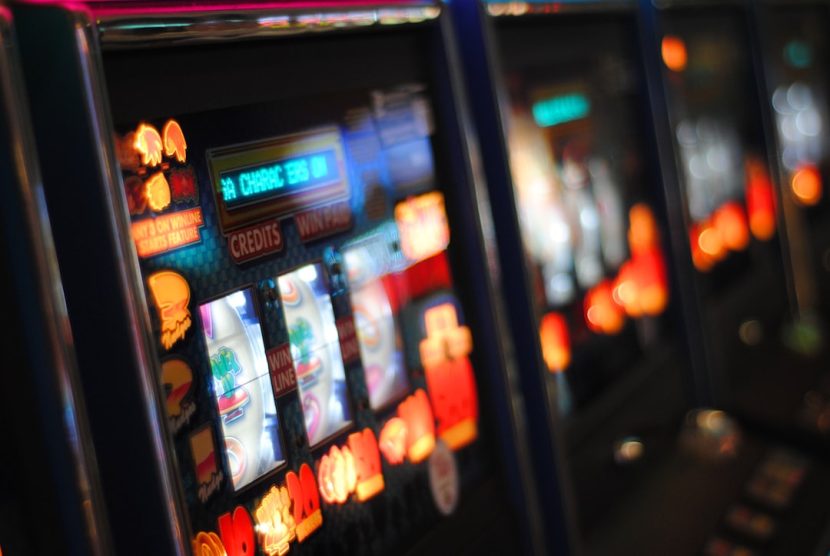
Slot machines represent the purest application of random reward psychology. Every pull of the lever or press of a button operates on a variable ratio schedule, where wins arrive unpredictably but frequently enough to maintain hope. Modern machines are calibrated to deliver near-misses—outcomes where symbols almost align—which activate the same reward circuitry as actual wins despite being losses. Research shows problem gamblers experience 25-30% higher activation in reward-related brain regions during these near-misses compared to recreational players. The machines are engineered to exploit the anticipation phase, when dopamine levels surge up to 200% higher than they would for guaranteed rewards.
Social Media and Technology
Social media platforms employ identical reinforcement patterns. The pull-to-refresh mechanism mirrors a slot machine lever, delivering an unpredictable mix of notifications, likes, and messages. Users check their phones an average of 96 times daily, seeking the dopamine hit of uncertain social validation. Key features that leverage variable reinforcement include:
- Notification badges that appear at random intervals
- Algorithmic feeds that show content in unpredictable sequences
- Like counters that update irregularly
- Messaging platforms where response timing varies
Each interaction offers the possibility of reward without guaranteeing it, creating the same persistent checking behavior Skinner observed in pigeons seven decades ago.
Video Game Monetization
Loot boxes—digital containers offering randomized virtual items—appear in 71% of top-grossing mobile games. Players spend real money for a chance at rare items, with odds often undisclosed. The mechanics mirror slot machines: colorful animations, suspenseful reveals, and variable ratio payouts. Unlike traditional gaming where purchases guarantee specific content, loot boxes sell uncertainty itself, transforming the anticipation into the product.
Cognitive Biases That Amplify Random Reward Effects
Random reinforcement doesn’t operate in isolation. Our evolved cognitive mechanisms, designed to detect genuine patterns in nature, create systematic errors when encountering true randomness. These biases transform occasional wins into compelling evidence of impending success, turning statistical independence into perceived opportunity.
The Gambler’s Fallacy
The human brain struggles to accept that each random event stands independent from those before it. After witnessing five consecutive losses, most people instinctively believe a win becomes “due”—a cognitive error known as the gambler’s fallacy. This belief stems from our pattern-recognition systems, which evolved to identify real causal relationships: dark clouds predict rain, rustling grass signals predators. These mechanisms served our ancestors well but catastrophically misfire when applied to slot machines, lottery draws, or roulette wheels.
The fallacy works bidirectionally. Some believe that a “hot streak” will continue, while others expect the opposite outcome to restore balance. Neither reflects mathematical reality. Each spin, card, or roll carries identical probabilities regardless of history. Yet this misconception drives people to increase their bets after losses, convinced that probability must “even out” in their favor soon.
Sunk Cost in Random Systems
Intermittent wins create particularly dangerous interactions with sunk cost thinking. After investing hours and money into a gambling session, a small win—even one that doesn’t recoup losses—triggers renewed hope. The brain interprets this random event as validation that continued play will eventually recover all prior investments.
This psychological trap explains why people often intensify their engagement precisely when they should withdraw. Each minor win reframes accumulated losses not as money gone, but as an investment nearing payoff. The random reinforcement schedule ensures just enough wins to maintain this illusion, keeping individuals locked in pursuit of breaking even long after rational analysis would demand they stop.
The Scale of the Problem
Between 2% and 3% of the global population currently meets diagnostic criteria for gambling disorder, representing approximately 156 to 234 million people worldwide. This prevalence has remained relatively stable across multiple studies, yet the mechanisms driving these disorders have become increasingly sophisticated and pervasive.
The financial scale reflects this psychological reach. The global online gambling market reached $63.5 billion in 2022, representing just one segment of an industry that has mastered the behavioral principles underlying compulsive engagement. These figures don’t merely represent entertainment spending—they indicate widespread exposure to variable ratio reinforcement schedules, the same psychological mechanism B.F. Skinner identified in laboratory settings seven decades ago.
Variable ratio reinforcement has been consistently identified as a primary mechanism in addiction development, not just in gambling but across multiple behavioral disorders. When rewards arrive unpredictably, the human brain enters a state of heightened anticipation. Dopamine levels can surge by up to 200% during the expectation of uncertain rewards compared to predictable ones, creating a neurological environment primed for compulsive behavior.
The consequences extend beyond clinical diagnoses. Problem gamblers demonstrate 25-30% higher activation in reward-related brain regions when experiencing near-misses—outcomes that are actually losses but feel tantalizingly close to wins. This neurological response helps explain why gambling disorder often develops gradually, with individuals unable to recognize their shifting relationship with chance-based activities until significant harm has occurred.
These numbers establish more than prevalence—they reveal a behavioral vulnerability that exists across populations, independent of individual willpower or intelligence. Understanding this scale is essential for recognizing that gambling disorder represents a predictable response to specific environmental stimuli, not a personal failing.
Protecting Yourself from Random Reward Manipulation
Understanding variable reinforcement is only the first step. The real challenge lies in recognizing when you’re being deliberately manipulated by these mechanisms and implementing effective countermeasures.
Recognition Strategies
The most powerful defense begins with awareness of the specific tactics designed to exploit your brain’s reward system. Watch for these warning signs that unpredictable reinforcement is being weaponized:
- Engineered near-misses: When you frequently experience outcomes that feel “almost” successful (two cherries instead of three, or a social media post that gets 99 likes when you hoped for 100), you’re likely experiencing deliberately designed losses masquerading as progress. Research shows these activate the same brain regions as actual wins, despite being failures.
- Removal of temporal cues: Casinos famously lack clocks and windows. Similarly, apps that eliminate natural stopping points through infinite scroll or autoplay features are removing your ability to track time investment.
- Escalating engagement requirements: If a platform progressively demands more interaction for the same level of reward, variable reinforcement is being layered with other manipulative techniques.
- Celebration of randomness: Marketing that emphasizes “you never know what you’ll get” or “every time is different” is explicitly advertising variable ratio reinforcement.
Practical Safeguards
Protection requires concrete action before engagement, not willpower during moments of dopamine-fueled anticipation:
- Pre-commitment devices: Establish non-negotiable limits before you begin. Set deposit limits on gambling accounts, use app timers that force closure, or give financial control to a trusted person. Decision-making during the activity itself is neurologically compromised.
- Eliminate accessibility: Self-exclusion programs exist for gambling venues and websites. Use them without shame. For social media and gaming, delete apps from your phone and access only through intentionally inconvenient methods.
- Track patterns in non-gambling contexts: Variable reinforcement operates in email checking, dating apps, and video game loot boxes. Apply the same scrutiny to any activity where you repeatedly check for unpredictable rewards.
Conclusion: Knowledge as Protection
Random rewards exert such powerful influence because they exploit fundamental learning mechanisms that evolved over millions of years. Our brains developed to detect patterns, anticipate resources, and persist in uncertain environments—adaptations that served our ancestors well but leave us vulnerable to modern systems deliberately engineered to hijack these processes. Variable reinforcement schedules don’t represent a design flaw in human psychology; they reflect normal brain function responding to abnormal stimuli.
Understanding these mechanisms transforms your relationship with any system that uses unpredictable rewards. Recognition is the essential first step toward informed decision-making. When you can identify the dopamine surge of anticipation, the engineered near-miss, or the deliberate removal of stopping cues, you shift from passive participant to informed observer. This awareness doesn’t eliminate vulnerability—these are deeply embedded neurological responses—but it creates the critical space needed for conscious choice.
Apply this knowledge actively. When you encounter any platform, game, or activity that delivers unpredictable rewards, ask yourself: Is this randomness serving my interests, or am I being systematically manipulated? The answer to that question, informed by understanding variable reinforcement, empowers you to protect your time, attention, and resources from exploitative design.