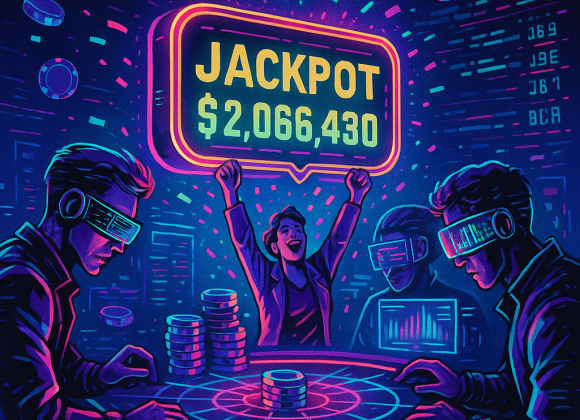
Americans spend over $100 billion annually on lottery tickets, chasing jackpots with odds exceeding 1 in 292 million. This staggering figure reveals a critical gap: most people make decisions involving probability without understanding the fundamental concepts that govern chance. The good news is that grasping probability doesn’t require calculus, advanced statistics, or mathematical expertise. The core principles that protect you from cognitive biases, poor financial decisions, and gambling-related harm can be explained with simple arithmetic and clear examples. This guide demystifies probability through accessible explanations, revealing how mathematical literacy serves as your most powerful defense against exploitation in an uncertain world.
What Probability Really Means: The Basics
When you flip a coin, the probability of getting heads is 0.5. When you check tomorrow’s weather forecast showing a 70% chance of rain, that’s a probability of 0.7. These numbers represent positions on a simple scale that runs from 0 to 1, where 0 means something cannot happen and 1 means it absolutely will happen.
The 0 to 1 Scale Explained
Every event you can imagine sits somewhere on this scale. A probability of 0 represents impossibility—like rolling a standard six-sided die and getting a 7. A probability of 1 represents certainty—like the sun rising tomorrow (at least from our everyday perspective). Everything else falls in between.
Most events we encounter in daily life cluster in the middle ranges. The probability of drawing a heart from a standard deck of cards is 0.25 (or 25%). The probability of rolling any specific number on a fair die is approximately 0.167 (about 16.7%). Understanding where an event sits on this scale helps you evaluate whether a risk is worth taking or whether an opportunity deserves your attention.
Some people prefer percentages, which simply multiply the 0-to-1 scale by 100. A probability of 0.3 equals 30%. A probability of 0.001 equals 0.1%. The underlying meaning stays identical—you’re still measuring how likely something is to occur.
Why Single Events Are Unpredictable
Here’s where probability becomes counterintuitive. A weather forecast showing 70% chance of rain doesn’t tell you whether it will rain tomorrow. It tells you that in 100 similar atmospheric conditions, roughly 70 would produce rain. The individual outcome remains uncertain.
This distinction matters enormously when evaluating risks. The law of large numbers confirms that probability reveals itself through repetition. Flip a coin ten times and you might see seven heads and three tails. Flip it 10,000 times and you’ll almost certainly observe close to 5,000 heads and 5,000 tails. Probability describes patterns across many trials, not the result of your next single attempt.
Independent vs. Dependent Events: Why Past Results Don’t Predict the Future
A roulette ball has just landed on black seven times in a row. Observers crowd around the table, convinced red is “due” to appear. They bet heavily on red, certain that probability must balance itself out. They lose. The ball lands on black an eighth time, indifferent to their expectations and their money.
This scenario illustrates the critical difference between independent and dependent events. Independent events are outcomes where previous results have absolutely no influence on future results. Each coin flip, dice roll, or slot machine spin operates in isolation from what came before. A coin doesn’t remember landing on tails five times in a row, and it has no mechanism to “correct” toward heads. The probability remains exactly 50/50 on every single flip, regardless of history.
Dependent events, by contrast, actually do change based on prior outcomes. Drawing cards from a deck without replacement creates dependency: if you pull the ace of spades, the probability of drawing it again becomes zero. The composition of the deck has genuinely changed. Similarly, removing colored balls from an urn shifts the odds for subsequent draws.
The Gambler’s Fallacy in Action
The gambler’s fallacy occurs when people apply dependent-event reasoning to independent situations. This cognitive bias makes patterns appear meaningful when they’re merely coincidental. After witnessing several losses, a person believes they’re “due for a win,” as if some cosmic force tracks individual fortunes and ensures balance. Research confirms this thinking error affects both casual participants and those with gambling problems, driving continued play despite mounting losses.
Why Roulette Wheels Have No Memory
Casino games are deliberately designed as independent events. Modern slot machines use random number generators that produce outcomes with no connection to previous spins. The machine doesn’t track whether you’ve won or lost, and it cannot become “hot” or “cold.” Each activation is a fresh probability calculation. Understanding this independence is perhaps the most powerful protection against the “one more try” mentality that characterizes problem gambling. The wheel, the dice, the machine—none of them owe you anything based on what happened before.
Expected Value: The Math Behind Smart Decisions
Every bet, every lottery ticket, and every casino game carries a hidden price tag that most players never calculate. Expected value reveals this cost with mathematical precision, stripping away the excitement and emotional appeal to show what actually happens to your money over time.
Calculating Expected Value Simply
Expected value represents the average outcome you can expect if you repeat a decision many times. The calculation multiplies each possible outcome by its probability of occurring, then adds these products together. Consider a simple coin flip where you win $2 for heads and lose $1 for tails. The expected value is (0.5 × $2) + (0.5 × -$1) = $0.50 per flip. You gain 50 cents on average with each play.
Now examine a $1 lottery scratch ticket that offers a 1 in 5 chance of winning $3. The expected value is (0.2 × $3) + (0.8 × $0) – $1 = -$0.40. You lose 40 cents per ticket on average. That negative expected value means the game is mathematically designed to extract money from players over time. The more you play, the more certain your losses become.
This principle applies universally to commercial gambling. When expected value is negative, you’re paying for entertainment, not making an investment. The house doesn’t win because of luck—it wins because the mathematics guarantee profit across thousands of transactions.
House Edge Across Different Games
The house edge quantifies the casino’s built-in mathematical advantage, expressed as the percentage of each bet the establishment expects to keep over time. This edge varies dramatically across games:
| Game | House Edge | Expected Loss per $100 Wagered |
|---|---|---|
| Blackjack (optimal strategy) | 0.5% | $0.50 |
| Craps (pass line bet) | 1.4% | $1.40 |
| Roulette (American) | 5.3% | $5.30 |
| Slot Machines | 2-25% | $2.00-$25.00 |
| Keno | 25-40% | $25.00-$40.00 |
Understanding these numbers transforms how you perceive gambling promotions and jackpot headlines. A slot machine with a 10% house edge returns 90 cents per dollar wagered on average. Play $100 through the machine twenty times, and the expected value predicts you’ll have roughly $13 remaining—a mathematical outcome independent of winning streaks or perceived “hot” machines.
The Law of Large Numbers: Why Casinos Always Win
A roulette wheel spins thousands of times each day, and over those thousands of spins, the casino’s profit becomes mathematically inevitable. This phenomenon—where outcomes align with predicted probabilities only after many trials—explains why gambling establishments remain profitable businesses while individual players walk away with vastly different experiences.
The law of large numbers describes how actual results converge toward expected probability as trials accumulate. When you flip a coin ten times, you might see seven heads and three tails. Nothing is broken. The small sample size naturally produces high variability. Flip that same coin ten thousand times, and you’ll find the split approaching 50-50 with remarkable consistency. The probability hasn’t changed between trials; only the number of trials has changed.
Casinos engineer their entire business model around this mathematical principle. Consider a slot machine with a 5% house edge. On any single spin, a player might win $100 or lose $1. That individual trial reveals nothing about the underlying probability. But across 100,000 spins from all players combined, the casino captures its 5% with near certainty. The establishment experiences the predictable long-term average while each patron experiences the unpredictable short-term volatility.
This creates an asymmetry that many players fail to recognize. A person visiting a casino for an evening might play 200 hands of blackjack. That’s their entire sample size—their complete experience with probability. The casino, meanwhile, facilitates 50,000 hands across all tables that same night. The player lives in the world of high variability where anything seems possible. The casino operates in the realm of statistical certainty where mathematics guarantees profit.
Understanding this distinction matters because it reveals why personal gambling experiences—whether winning or losing—provide no meaningful information about probability or future outcomes. Your twenty spins tell you nothing. The casino’s twenty million spins tell the whole story.
Common Probability Fallacies That Lead to Poor Decisions
Our brains evolved to detect patterns and make quick judgments, but these same cognitive shortcuts consistently lead us astray when evaluating probability. Research in behavioral psychology reveals that several specific fallacies distort our understanding of chance, particularly in gambling contexts where these misperceptions can result in significant financial and personal harm.
The Hot Hand and Winning Streaks
The hot hand fallacy convinces people that success breeds success in random events. Basketball fans believe a player who has made several shots in a row is more likely to make the next one. Gamblers feel they’re “on a roll” after winning a few hands at blackjack. Yet controlled studies consistently demonstrate that in truly random sequences, past outcomes provide no predictive information about future results.
This belief persists because regression to the mean operates invisibly. When someone experiences an extreme result—whether a winning streak or a series of losses—probability dictates that subsequent outcomes will likely trend toward average performance. Gamblers interpret this natural statistical phenomenon as evidence that their luck has “changed” rather than recognizing the mathematical inevitability of moderation over time.
The availability heuristic compounds these errors by making vivid, memorable events seem more probable than they actually are. Media coverage of lottery winners creates the illusion that such outcomes occur with meaningful frequency, when the actual probability of winning major jackpots like Powerball remains approximately 1 in 292 million. People mentally retrieve these dramatic examples far more easily than the billions of losing tickets, systematically overestimating their chances.
Why Near-Misses Feel Like Wins
Neuroscience research has revealed a particularly insidious phenomenon in slot machine design: near-miss outcomes activate the same brain reward pathways as actual wins, despite being complete losses. When the reels show two jackpot symbols with the third just one position away, players experience a surge of dopamine and heightened motivation to continue playing.
These key cognitive distortions create vulnerability to gambling-related harm:
- Pattern detection in randomness: Believing that outcomes in independent events influence each other
- Selective memory: Recalling wins more vividly than the more frequent losses
- Illusion of control: Feeling that skill or strategy can influence purely chance-based outcomes
- Temporal distortion: Underestimating time and money spent during gambling sessions
Understanding these fallacies provides a foundation for recognizing when intuition about probability conflicts with mathematical reality.
Practical Applications: Using Probability Literacy to Protect Yourself
Every commercial gambling operation in America is designed with a mathematical certainty: the house will profit over time. The house edge ranges from 0.5% in blackjack with perfect strategy to over 25% in certain slot machines, meaning every dollar wagered carries a predictable negative expected value for the player. Understanding this mathematical reality transforms how you approach risk-based decisions.
Red Flags of Probability Misunderstanding
Certain thought patterns signal dangerous misunderstandings about probability:
- Believing you’re “due” for a win after a losing streak (the gambler’s fallacy)
- Thinking you’ve discovered a pattern in random outcomes
- Assuming past results influence independent future events
- Trusting that a betting system can overcome mathematical disadvantage
- Confusing short-term variance with long-term probability
These cognitive errors stem from how our brains evolved to find patterns, even where none exist. No betting system—whether Martingale, Fibonacci, or any other strategy—can eliminate negative expected value. The mathematics remain unchanged regardless of how you structure your wagers.
Questions to Ask Before Gambling
Before engaging in any probability-based activity involving money, apply this framework:
- What is the expected value of this decision? Calculate what you’ll lose on average per dollar wagered. If you can’t determine this, you shouldn’t participate.
- Can I afford to lose this money completely? Treat gambling expenditures as entertainment costs, not investment opportunities.
- Am I making this decision because I understand the odds, or because I feel lucky? Intuition about randomness is notoriously unreliable.
- What percentage of my discretionary income does this represent? Research indicates that gambling becomes problematic when it exceeds 2-3% of household income.
- Am I trying to recover previous losses? This “chasing” behavior is a primary warning sign of developing gambling disorder.
Probability literacy extends beyond casinos. These same analytical tools help evaluate insurance policies, investment risks, and medical decisions where uncertainty plays a role.
Mastering probability doesn’t require mathematical genius—it requires willingness to challenge your intuitive thinking. The concepts presented here use nothing more complex than multiplication and division, yet they reveal the mathematical reality underlying every game of chance. Understanding expected value, the law of large numbers, and the independence of random events protects you from exploitation by systems deliberately designed to profit from probability illiteracy. Remember that all commercial gambling carries negative expected value, and no betting strategy can overcome this mathematical disadvantage. The real power of probability literacy extends far beyond the casino floor. Apply these same analytical principles when evaluating insurance policies, investment opportunities, medical treatments, and any decision involving risk and uncertainty. In a world filled with chance, mathematical clarity becomes your most reliable guide.