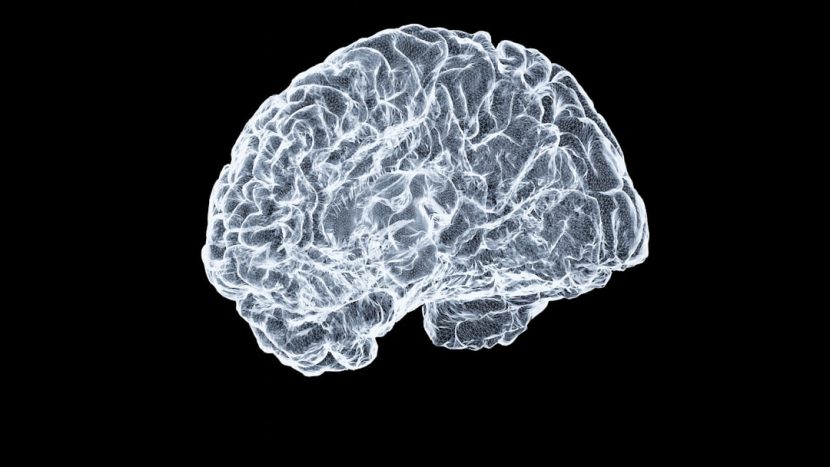
You check your phone for the tenth time in an hour, hoping for a message. You buy a lottery ticket despite knowing the odds. You refresh your email, anticipating news that might change everything. These moments share a common thread: your brain finds uncertainty irresistible. This attraction isn’t a character flaw or lack of willpower—it’s hardwired neurobiology shaped by millions of years of evolution. This article examines the specific brain mechanisms that make unpredictable outcomes so compelling, from dopamine release patterns in the ventral striatum to the evolutionary pressures that favored risk-taking behavior. Understanding these neurological processes doesn’t promote risk-taking; rather, it provides the knowledge needed to recognize when your ancient reward circuits are being activated by modern environments designed to exploit them. You’ll gain practical insights into the psychology of uncertainty and learn to identify these patterns in your daily decisions.
The Dopamine System and Reward Anticipation
The brain’s reward circuitry doesn’t wait for prizes to arrive before celebrating. Research shows that 60-80% of dopamine neurons fire in response to unexpected rewards, while only 20-40% respond to expected ones. This neurochemical response explains why the suspense of waiting for lottery numbers feels more thrilling than receiving your regular paycheck, even when the paycheck has greater value.
The ventral striatum and nucleus accumbens, key structures in the brain’s reward pathway, release dopamine most intensely during anticipation of uncertain outcomes rather than during the receipt of rewards themselves. This anticipatory surge creates the psychological tension that makes risk-taking activities feel compelling. Brain imaging studies reveal that dopamine levels during gambling activities can reach magnitudes comparable to those observed with certain drug use, highlighting the neurological potency of uncertainty.
How Reward Prediction Error Works
Reward prediction error describes the brain’s mechanism for comparing expected outcomes against actual results. When you anticipate winning $10 but receive $50, your dopamine neurons fire vigorously to signal this positive discrepancy. Conversely, expecting $50 but receiving $10 triggers a dopamine decrease, signaling disappointment. This system evolved to help humans learn which behaviors produce beneficial outcomes.
The phenomenon becomes problematic when applied to random events. Near-miss experiences in gambling, such as landing two out of three matching symbols, activate the same brain regions as actual wins. The brain interprets these near-misses as learning opportunities rather than losses, falsely suggesting that skill improvement could change future outcomes in purely chance-based scenarios.
Why Uncertainty Amplifies Dopamine Response
Unpredictability itself acts as a reward amplifier. The anterior cingulate cortex and orbitofrontal cortex activate during ambiguous situations, creating heightened attention and engagement. This neurological response made evolutionary sense when uncertainty signaled potential danger or opportunity requiring focus. In modern gambling environments, however, this same mechanism keeps individuals engaged with activities that offer no genuine learning value or skill development, only random variation around a negative expected return.
Brain Regions Activated by Risk and Ambiguity
When faced with uncertain outcomes, your brain doesn’t rely on a single “risk center” but rather orchestrates a complex network of regions that collectively process ambiguity, evaluate potential outcomes, and prepare your body for action. Understanding this neural architecture reveals why some people find uncertainty irresistible while others avoid it entirely.
The Decision-Making Network
Three interconnected regions form the cognitive backbone of risk processing:
- Anterior cingulate cortex (ACC): Detects conflicts between competing options and monitors errors during decision-making, showing heightened activation when outcomes become less predictable
- Orbitofrontal cortex (OFC): Evaluates the expected value of different choices and updates predictions based on new information, particularly during ambiguous situations
- Ventromedial prefrontal cortex (vmPFC): Integrates emotional information with logical assessment, helping assign subjective value to uncertain prospects
Research demonstrates that individuals with reduced activity in the vmPFC during decision-making tasks show significantly impaired judgment under uncertainty. This network constantly recalibrates expectations, with the ventral striatum and nucleus accumbens releasing dopamine not just when rewards arrive, but more intensely during the anticipation phase when outcomes remain unknown.
Emotional Processing Centers
Parallel to cognitive evaluation, emotional systems add visceral weight to uncertain situations:
- Amygdala: Exhibits markedly higher activation during ambiguous risks compared to known probabilities, essentially treating the unknown as a potential threat requiring heightened vigilance
- Insula: Processes interoceptive signals—your “gut feelings”—translating bodily states into emotional information that influences whether you perceive risk as exciting or threatening
The insula’s role proves particularly significant in gambling contexts. It generates the physiological sensations that gamblers often interpret as intuition or luck, creating a feedback loop where bodily arousal reinforces continued risk-taking. This neural architecture explains why uncertainty feels different from calculated risk: ambiguity engages emotional systems more intensely than situations with transparent probabilities.
Evolutionary Origins of Risk-Taking Behavior
For early humans navigating the African savanna 200,000 years ago, the decision to explore an unfamiliar water source or investigate distant smoke could mean the difference between feast and famine. Those who avoided all uncertainty starved in familiar but depleted territories. Those who took calculated risks discovered new food sources, identified predator patterns, and adapted to changing environments. Natural selection favored individuals whose brains rewarded exploratory behavior with pleasurable neurochemical responses.
This evolutionary legacy explains why modern humans experience dopamine surges when confronting uncertain outcomes. The ventral striatum and nucleus accumbens—brain structures that evolved to reinforce survival-critical behaviors—release dopamine most intensely not when we receive rewards, but during the anticipation of unpredictable rewards. Research demonstrates that 60-80% of dopamine neurons activate in response to unexpected rewards, compared to only 20-40% for predictable ones. This neurological pattern made evolutionary sense when unpredictability signaled potential opportunities worth investigating.
The problem lies in the profound mismatch between ancestral and contemporary environments. Early humans faced risks with tangible, immediate consequences: a rustling bush might contain berries or a predator. Modern risks, particularly those engineered into gambling systems, exploit these ancient reward circuits without providing genuine survival advantages. The same amygdala activation that once helped our ancestors assess whether to cross a crocodile-infested river now fires during slot machine play, treating manufactured uncertainty as if it were evolutionarily significant.
This neurological architecture persists because evolution operates on geological timescales. Our brains remain wired for environments that disappeared millennia ago, leaving us vulnerable to designed experiences that hijack reward prediction systems for commercial purposes rather than survival benefits.
The Psychology of Near-Misses and False Hope
When a slot machine displays two jackpot symbols with the third stopping just one position away, the brain responds with a surge of activity nearly indistinguishable from an actual win. This neurological quirk represents one of the most potent psychological mechanisms driving persistent gambling behavior, and research demonstrates it increases continued play by approximately 30% compared to clear losses.
How Near-Misses Manipulate Perception
Near-miss experiences activate the ventral striatum and nucleus accumbens—the same reward-processing regions that light up during genuine victories. Brain imaging studies reveal that these “almost wins” trigger dopamine release patterns remarkably similar to actual monetary gains, despite representing losses in every practical sense. The brain interprets spatial proximity on a reel as temporal proximity to success, creating an illusion that winning is imminent and skill improvement is occurring.
This neurological response creates a cognitive distortion where players perceive themselves as “getting closer” to winning, even though each spin operates on independent random probability. The anterior cingulate cortex, responsible for error detection and conflict monitoring, shows heightened activation during near-misses as the brain struggles to reconcile the visual “almost” with the factual loss. This conflict generates motivation to continue, as the cognitive system interprets the near-miss as correctable error rather than predetermined outcome.
Variable Ratio Reinforcement in Practice
Game designers deliberately engineer near-miss frequency to maximize this psychological effect. Modern slot machines can be programmed to display near-miss configurations at rates far exceeding random chance, typically showing “almost wins” on 30-45% of losing spins. This exploitation of variable ratio reinforcement—where rewards arrive unpredictably—creates the most persistent behavioral patterns known in psychological research.
The combination of genuine wins, near-misses, and complete losses produces a neurochemical environment where the brain remains in constant anticipation. Each near-miss resets expectation, convincing the reward system that adjustment of strategy or continued play will yield success, despite the mathematical reality of independent probability governing each outcome.
Cognitive Biases That Amplify Risk Attraction
Several systematic errors in thinking make risky situations appear far more attractive than objective analysis would justify. These cognitive biases operate beneath conscious awareness, hijacking rational decision-making processes before individuals realize their judgment has been compromised.
Optimism bias stands as one of the most powerful distortions. This tendency causes people to overestimate the probability of positive outcomes while simultaneously underestimating negative ones. A person buying a lottery ticket may accurately know the odds are 1 in 14 million, yet still maintain an inflated sense that “this could be my lucky day.” The bias doesn’t eliminate knowledge of probability—it simply makes unfavorable odds feel less personally relevant.
Loss chasing represents another critical distortion linked to the psychological difficulty of accepting sunk costs. When someone experiences a loss, the anterior cingulate cortex shows heightened activation, particularly when attempting to recover what’s been lost. Brain imaging reveals this region lighting up intensely during recovery attempts, creating a neurological drive to “make things right” that overrides logical assessment of further risk. This explains why gamblers often increase bet sizes after losses, despite each new wager carrying the same unfavorable odds as the previous one.
These biases share a common characteristic: they function automatically. Research demonstrates that cognitive distortions related to risk operate in brain regions that process information before it reaches areas responsible for conscious deliberation. Consider these key mechanisms:
- Availability heuristic: Recent wins or vivid stories of big payouts become mentally overweighted when assessing probability
- Illusion of control: Belief that personal involvement or rituals influence purely random outcomes
- Gambler’s fallacy: Expectation that past results somehow influence independent future events
- Confirmation bias: Selective attention to outcomes that support continued risk-taking while dismissing contrary evidence
The automatic nature of these biases makes them particularly dangerous, as logical knowledge alone rarely counteracts their influence.
When Attraction Becomes Addiction: Problem Gambling and the Brain
The same neural circuits that help humans learn from uncertainty can malfunction in ways that trap individuals in compulsive patterns. While most people can engage with risk-taking activities without harm, approximately 2-3% of the global population meets diagnostic criteria for gambling disorder, a condition recognized by major psychiatric classifications as a behavioral addiction with distinct neurological signatures.
Neurological Markers of Problem Gambling
Brain imaging research reveals measurable differences in how problem gamblers process decisions and rewards. Studies consistently document 20-30% reduced activity in the ventromedial prefrontal cortex during decision-making tasks among pathological gamblers compared to control groups. This region serves as the brain’s executive control center, responsible for weighing consequences, inhibiting impulses, and integrating emotional information into rational choices.
The prefrontal cortex essentially acts as a brake system for impulsive behavior. When its function diminishes, individuals struggle to stop gambling despite mounting losses, failed promises to quit, or devastating personal consequences. Simultaneously, their reward circuitry remains hyperactive, creating an imbalance where the accelerator overwhelms the brakes. This neurological pattern explains why problem gamblers often report feeling unable to control their behavior even when they consciously recognize the harm.
Risk Factors and Warning Signs
Multiple factors increase vulnerability to gambling disorder. Genetic predisposition accounts for approximately 50-60% of risk, with first-degree relatives of problem gamblers showing significantly higher rates of the condition. Early exposure to gambling, co-occurring mental health conditions (particularly depression, anxiety, and substance use disorders), and impulsivity traits all elevate risk.
Key warning signs include:
- Needing to gamble with increasing amounts to achieve desired excitement
- Repeated unsuccessful efforts to control or stop gambling
- Restlessness or irritability when attempting to reduce gambling
- Gambling to escape problems or relieve negative mood states
- Returning to recoup losses (“chasing losses”)
- Lying to conceal the extent of gambling involvement
- Jeopardizing relationships, employment, or education due to gambling
- Relying on others to provide money for desperate financial situations
Recognition of these patterns represents a critical first step toward intervention and recovery.
Practical Strategies for Managing Risk Attraction
Understanding that your ventral striatum releases dopamine more intensely during uncertain anticipation than during actual reward receipt gives you a powerful tool: you can recognize the neurological mechanism driving your impulses before they control your behavior.
Recognition and Self-Monitoring
The gap between impulse and action represents your most critical intervention point. When you feel drawn to a risky decision, your anterior cingulate cortex and orbitofrontal cortex are processing ambiguity while dopamine floods your reward circuits. This knowledge allows you to identify these moments in real-time.
Implement these monitoring techniques:
- The 24-Hour Rule: When tempted by a high-risk decision, commit to waiting one full day before acting. Dopamine surges typically subside within hours, allowing prefrontal decision-making circuits to regain influence.
- Physiological Awareness: Learn your body’s signals. Increased heart rate, shallow breathing, or racing thoughts often precede impulsive risk-taking. These physical markers indicate heightened amygdala activation during uncertainty.
- Decision Journaling: Document the circumstances surrounding risk-attraction episodes. Record the time, emotional state, recent stressors, and outcome. Patterns typically emerge within 2-3 weeks, revealing specific triggers.
Protective Strategies
Pre-commitment devices work by constraining future behavior when your prefrontal cortex has full control, protecting you from later dopamine-driven impulses:
- Set hard financial limits using account restrictions, not willpower
- Install website blockers during vulnerable hours (commonly evenings after 8 PM)
- Establish accountability partnerships where trusted individuals receive alerts about high-risk activities
- Create friction by removing stored payment methods and requiring manual entry for each transaction
Building alternative dopamine sources proves essential for long-term regulation. Exercise generates predictable dopamine release without financial risk. Learning new skills activates reward circuits through achievement rather than uncertainty. Social connection provides neurochemical rewards through oxytocin and endorphins.
Seek professional support when risk-taking causes financial harm exceeding one month’s discretionary income, disrupts relationships, or occupies more than 10 hours weekly of mental attention. Cognitive-behavioral therapy specifically targets the thought patterns that amplify reward prediction errors in your brain.
Conclusion: Knowledge as Protection
Understanding the neuroscience behind risk attraction fundamentally changes your relationship with uncertainty. These brain mechanisms—dopamine surges during anticipation, reward prediction errors, near-miss responses—are universal features of human neurology, not personal weaknesses. The ventral striatum that compelled your ancestors to explore new territories operates identically in your brain today, but now it encounters slot machines and lottery systems engineered to exploit these ancient circuits with precision your ancestors never faced.
This knowledge empowers better decision-making. When you recognize the physiological signs of dopamine flooding your reward pathways, you create space between impulse and action. When you understand that near-misses trigger the same neural responses as wins, you can reframe “almost” as the loss it actually represents. Awareness doesn’t eliminate these neurological responses, but it enables conscious regulation of behaviors that once felt automatic.
The attraction to uncertainty served legitimate evolutionary purposes in environments where exploration meant survival. Modern contexts require deliberate management of these inherited tendencies, particularly when facing systems designed to hijack your reward circuitry for profit. Apply this understanding to recognize patterns in your daily decisions, implement protective strategies before dopamine-driven impulses take control, and seek support when needed. If you’re concerned about gambling behavior in yourself or someone you care about, resources like the National Council on Problem Gambling (1-800-522-4700) provide confidential assistance. Your brain’s attraction to risk is hardwired, but your response to that attraction remains within your control.