Why does losing by one symbol feel more motivating than losing by three? When a slot machine displays two jackpot symbols with the third just one position away, you’ve experienced a complete loss—yet your brain responds as though you nearly succeeded. This paradox, known as the near-miss effect, has been studied since the 1950s and represents one of the most powerful psychological mechanisms in behavioral science. While gambling provides the clearest examples, near misses influence athletic performance, video game engagement, and workplace persistence. This article examines the neuroscience behind near misses, how they’re deliberately engineered to exploit human psychology, and what research reveals about protecting yourself from this form of behavioral manipulation.
The Near-Miss Effect: Origins and Definition
When a slot machine displays two matching symbols followed by the third symbol landing just one position away from a match, the player has objectively lost. Yet this “almost win” creates a surge of motivation that pure losses never generate. This phenomenon—where outcomes that appear close to success despite being complete failures—represents one of the most counterintuitive aspects of human decision-making.
A near-miss outcome is any result that resembles a win in appearance but delivers no actual reward. The reel that stops one symbol short of a jackpot, the lottery ticket matching five of six numbers, or the basketball shot that circles the rim before falling out all share this psychological signature. These experiences register cognitively as losses but trigger emotional responses more similar to wins than to clear failures.
Skinner’s Pioneering Research
The scientific documentation of this effect began in the 1950s when behavioral psychologist B.F. Skinner conducted experiments with pigeons trained to peck at targets for food rewards. Skinner observed that when pigeons encountered near-miss outcomes—scenarios where their behavior almost produced the desired result—their response rates actually increased compared to clear failures. The birds behaved as though coming close to success provided information about improving future performance, even in situations governed entirely by chance.
This finding established a foundational paradox: near misses function as losses in objective terms but as motivational catalysts in behavioral terms. The pigeons couldn’t distinguish between skill-based tasks where “getting closer” indicated learning and random outcomes where proximity meant nothing. This cognitive confusion would later prove central to understanding human gambling behavior.
Beyond Gambling: Where Near Misses Appear
While most research focuses on gambling contexts, near-miss effects appear across multiple domains. Athletes describe “moral victories” after close defeats. Job seekers feel encouraged by reaching final interview rounds despite not receiving offers. Video game designers deliberately incorporate near-death survival moments to heighten engagement. The mechanism remains consistent: outcomes framed as “almost successful” generate persistence despite representing objective failure.
What Happens in the Brain During a Near Miss
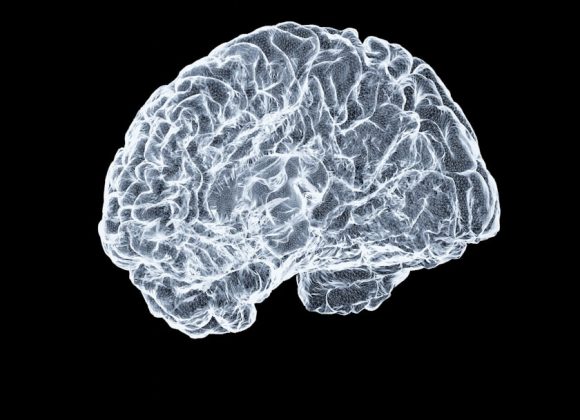
When a slot machine displays two jackpot symbols with the third one position away, the brain responds as if something positive just occurred. Neuroimaging research reveals that near misses activate the same reward-processing regions as actual wins, creating a neurological paradox: the brain treats a loss like a partial victory.
Dopamine and the Reward System
The ventral striatum, a critical component of the brain’s reward circuitry, shows substantial activation during near-miss experiences. Brain imaging studies demonstrate that these “almost wins” generate approximately 80-85% of the neural activation intensity observed during genuine wins. This disproportionate response occurs despite the objective reality that a near miss produces the identical financial outcome as any other loss.
The neurotransmitter dopamine plays a central role in this phenomenon. Dopamine neurons fire in response to unexpected rewards and signals that predict future rewards. During near misses, dopamine release occurs even though no actual reward was received. This neurochemical response reinforces the behavior that preceded it, creating a powerful motivation to continue playing. The brain essentially interprets proximity to winning as evidence that success is attainable with continued effort.
The Role of the Anterior Insula
The anterior insula, a brain region involved in processing emotional salience and bodily states, also activates during near-miss experiences. This activation appears particularly significant in sustaining gambling behavior. The anterior insula helps generate the subjective feeling that something meaningful just happened, contributing to physiological arousal and the urge to continue.
Research comparing problem gamblers to recreational players reveals important differences in these neural responses. Problem gamblers demonstrate heightened activation in these reward-related regions during near misses, experiencing neurological reactions two to three times more intense than those seen in recreational gamblers. This amplified response may explain why near misses prove especially compelling for individuals vulnerable to gambling addiction, transforming what should register as losses into experiences that feel tantalizingly close to success.
How Slot Machines Are Engineered to Exploit Near Misses
Modern slot machines generate near-miss outcomes on 30-45% of losing spins—a rate vastly exceeding the 5-10% frequency that random chance would produce. This isn’t an accident of probability. Game designers deliberately program machines to maximize these psychologically potent “almost wins,” creating an artificial pattern that exploits fundamental vulnerabilities in human reward processing.
Programmed Near-Miss Rates
Unlike mechanical slot machines of the past, where reel positions determined outcomes through physical probability, digital machines use random number generators that separate the displayed outcome from the actual result. The machine determines win or loss first, then selects which symbols to display. When programmed for a loss, the software can choose to show two matching jackpot symbols with the third just above or below the payline—a configuration designed to suggest proximity to winning rather than reflect true odds.
This programming creates what researchers call a “synthetic near miss.” The player sees cherries-cherries-lemon and experiences the physiological arousal of almost winning, despite the fact that this specific arrangement was no closer to a win than cherries-grapes-orange would have been. The mathematical probability remained identical, but the psychological impact differs dramatically.
Sensory Amplification Techniques
Visual presentation alone doesn’t maximize the near-miss effect. Manufacturers layer additional sensory cues to amplify the experience:
- Celebratory sounds that play during near misses, using tones similar to winning sequences
- Extended animations that slow the final reel, building anticipation before displaying the near-miss result
- Partial payout sounds triggered by two matching symbols, even when no money is won
- Visual highlighting that illuminates the matching symbols while dimming the mismatched one
These techniques transform a technical loss into something that feels like partial success. Brain imaging confirms this works: near misses activate reward-related regions at 80-85% of the intensity produced by actual wins. Regulatory bodies in several jurisdictions now debate whether to impose limits on near-miss frequency, recognizing that these engineered outcomes constitute a form of deceptive design rather than legitimate gameplay variation.
Cognitive Distortions Created by Near Misses
When a slot machine displays two jackpot symbols with the third just one position away, the brain doesn’t process this as a loss. Instead, it generates a cascade of false interpretations that can fundamentally alter decision-making. These cognitive distortions transform mathematically equivalent losses into psychologically distinct experiences that feel meaningful, progressive, and actionable.
The Illusion of Control
Near misses create a powerful belief that skill development or technique refinement will improve outcomes in purely random events. This illusion of control emerges because near misses feel informative—they suggest proximity to success rather than what they actually represent: statistically identical losses. Research demonstrates that this effect only occurs when participants perceive the outcome as somehow controllable or influenceable. When players understand they’re engaging with a random number generator, the motivational effect of near misses diminishes significantly.
The distortion operates through pattern recognition systems that evolved to identify genuine cause-and-effect relationships. A gambler who sees “cherry-cherry-lemon” interprets this as being “close” and may adjust timing, betting patterns, or even physical interaction with the machine. None of these actions affect outcomes determined milliseconds before any button press, yet the illusion persists because near misses mimic the feedback structure of actual skill-based activities.
Frustration as a Motivator
Frustration theory offers another explanation for near-miss persistence. Rather than providing positive reinforcement, near misses generate negative emotional states—frustration, disappointment, and unresolved tension—that paradoxically drive continued engagement. This negative reinforcement creates an urge to resolve the discomfort through achieving the narrowly missed outcome. Problem gamblers show physiological arousal rates two to three times higher than recreational players when experiencing near misses, suggesting their nervous systems respond more intensely to these manufactured moments of “almost.” The combination of perceived controllability and frustration-driven motivation creates a psychological trap where losses feel like progress.
Problem Gamblers vs Recreational Players: Different Responses
Physiological monitoring reveals a striking divide: when a slot machine displays two cherries with the third just one position away, problem gamblers experience measurably different bodily responses than recreational players. Research using heart rate monitors and skin conductance sensors shows that problem gamblers exhibit significantly heightened arousal during near-miss events, with cardiovascular responses spiking to levels approaching actual wins.
The difference extends beyond simple excitement. Neuroimaging studies demonstrate that problem gamblers experience near-miss effects at rates 2-3 times higher than their recreational counterparts. This amplified response creates a feedback loop where the brain’s reward circuitry reacts more intensely to “almost winning” than it does in non-problematic players. The heightened skin conductance and accelerated heart rate function as physiological markers that distinguish vulnerability patterns.
Survey data from slot machine players provides additional context: approximately 60% report that near misses increase their desire to continue playing. However, this percentage masks critical variation between populations. Problem gamblers not only report stronger motivational effects but also demonstrate reduced awareness of the mathematical reality that near misses are programmed losses, not indicators of impending success.
These distinct response patterns suggest that near misses may serve as both a trigger and a diagnostic indicator. The recreational player might experience mild disappointment followed by rational assessment, while the problem gambler’s neurological and cardiovascular systems respond as though skill development or pattern recognition is occurring. This physiological overreaction to engineered outcomes represents one of the clearest biological signatures separating problematic gambling behavior from casual entertainment, offering researchers and clinicians measurable criteria for identifying at-risk individuals before financial and personal consequences escalate.
Protecting Yourself: Recognizing and Resisting Near-Miss Manipulation
Your heart races as the third symbol stops one position away from a jackpot. That physiological response—the increased heart rate and skin conductance—is precisely what designers intended. Protecting yourself starts with understanding that these reactions are manufactured, not organic signals of impending success.
The most critical reframe involves reclassifying near misses in your mind. When two jackpot symbols appear with the third just off-screen, you didn’t “almost win.” You lost completely. Slot machines are programmed to produce these outcomes on 30-45% of losing spins—far exceeding the 5-10% that random chance would generate. That “close call” is an engineered loss, not evidence of progress or skill development.
Practical strategies to counteract near-miss manipulation:
- Precommit to limits before exposure — Decide exact dollar amounts and time durations before entering any gambling environment. Write these down physically. The moment you start rationalizing “just one more spin because I was so close,” you’re experiencing the intended psychological effect.
- Disable sensory enhancements — When possible, mute sounds and reduce visual stimulation. Audio cues are specifically designed to trigger arousal during near misses. Research shows these multisensory elements amplify the motivational effect by creating false pattern recognition.
- Monitor your body’s warning signals — Studies demonstrate that problem gamblers show heightened physiological responses to near misses compared to recreational players. If you notice increased heart rate, sweating, or tunnel vision after “close calls,” treat these as red flags, not excitement. These responses indicate your brain is processing a loss as partial success.
- Apply the randomness reality check — Each spin operates independently with fixed probabilities. Previous outcomes—including near misses—provide zero predictive value for future results. The machine has no memory and you’re not “due” for a win.
- Externalize accountability — Share your predetermined limits with someone who can intervene. Having another person aware of your boundaries creates social accountability that pure willpower often cannot provide.
Key Takeaways: Understanding Near Misses to Make Better Decisions
Your brain registers a near miss as approximately 80-85% as rewarding as an actual win, yet your wallet experiences it as a 100% loss. This neurological mismatch sits at the heart of why near misses drive continued gambling behavior and why understanding them is essential for making informed decisions.
Consider these critical insights:
- Near misses are engineered, not accidental. Slot machines produce near-miss outcomes on 30-45% of losing spins—roughly six times more frequently than random chance would create. This deliberate design exploits how your brain processes almost-wins.
- Your brain treats near misses like victories. Neuroimaging reveals that near misses activate the same reward centers (ventral striatum and insula) as actual wins, creating motivation to continue despite financial losses. This biological response predates modern gambling—B.F. Skinner documented it in pigeons during the 1950s.
- Cognitive biases amplify the effect. Near misses fuel the illusion of control, making you believe you’re developing skill or getting closer to winning. In reality, each spin or play remains statistically independent with unchanged odds.
- Problem gamblers face heightened vulnerability. Research shows that individuals with gambling problems experience near-miss effects at rates 2-3 times higher than recreational players, with measurably increased heart rate and skin conductance in response to almost-wins.
- Awareness serves as protection. Consciously reframing near misses as complete losses—not progress toward victory—reduces their motivational impact. Recognizing that the machine manufactured the outcome to feel significant helps counter the neurological manipulation.
Understanding these mechanisms doesn’t eliminate the near-miss effect, but it equips you to recognize when your decision-making is being influenced by deliberate design rather than genuine opportunity.
Conclusion: Recognizing Manipulation to Reclaim Control
Near misses represent a powerful intersection of neuroscience and behavioral manipulation, where evolved pattern-recognition systems collide with engineered outcomes designed to exploit them. The research is unequivocal: what feels like progress toward winning is actually a programmed loss that activates your brain’s reward circuitry at 80-85% the intensity of actual success. This neurological hijacking occurs whether you’re spinning slot reels, buying lottery tickets, or engaging with any system that displays proximity to victory.
Understanding this mechanism empowers better decision-making across gambling and non-gambling contexts alike. When you recognize that accelerated heart rate after “almost winning” as a manufactured response rather than genuine excitement, you reclaim agency over your behavior. When you reframe two matching symbols as a complete loss rather than evidence you’re getting closer, you see through the illusion of control that keeps vulnerable individuals trapped in cycles of continued play.
The next time you encounter a near miss—in any context—pause and ask yourself: Is this outcome providing genuine information about skill development, or is it engineered to feel meaningful while delivering nothing? Apply this knowledge to protect yourself and others from exploitation. Share these insights with anyone who gambles recreationally, and recognize the warning signs in those who respond to near misses with intensified arousal rather than rational assessment. Near misses are losses dressed as progress. Seeing them clearly is the first step toward making decisions based on reality rather than manufactured perception.