In 2009, archaeologists working in southeastern Iran unearthed a collection of objects that would rewrite our understanding of human behavior: meticulously crafted dice dating to 3000 BCE, accompanied by game boards etched into stone. These weren’t primitive curiosities—they were sophisticated gambling implements, revealing that humans have been wagering on uncertain outcomes for at least five thousand years. This discovery raises a profound question: why has gambling persisted across every civilization, culture, and historical era? The answer lies not in moral failing but in the architecture of the human brain itself. This article traces gambling’s evolution from ancient Mesopotamian temples to modern neuroscience laboratories, examining the psychological mechanisms, cognitive biases, and neurological vulnerabilities that make gambling so universally compelling. Our purpose is educational—to understand behavior, not promote it.
Archaeological Origins: Gambling in Ancient Civilizations
Long before casinos lined the Las Vegas Strip or lottery tickets filled convenience store counters, humans were already rolling dice and wagering on uncertain outcomes. The archaeological record reveals that gambling is not a modern vice but a behavior woven into the fabric of human civilization for at least five millennia.
Mesopotamian Dice and Early Gaming
The oldest gambling implements discovered by archaeologists date to approximately 3000 BCE in ancient Mesopotamia. Six-sided dice, remarkably similar to those used today, have been unearthed from sites across the region. These weren’t crude prototypes—they were carefully crafted objects, often made from bone, wood, or precious stones, suggesting that gambling held significant cultural value.
What’s particularly fascinating is that these early games weren’t purely recreational. Mesopotamian gambling practices intertwined with divination rituals, where throwing dice or casting lots served as a method to discern the will of the gods. The line between gambling and religious practice blurred in ways that modern observers might find surprising. This sacred dimension gave gambling a legitimacy and social function beyond simple entertainment, embedding it deeply in community life.
Chinese Tiles and the Invention of Playing Cards
Ancient China developed its own rich gambling tradition independent of Mesopotamian influence. Archaeological evidence places tile-based games of chance in China around 2300 BCE. These early gaming tiles evolved over centuries, eventually contributing to the invention of playing cards during the Tang Dynasty in the 9th century CE—a development that would revolutionize gambling worldwide.
Chinese gambling culture also demonstrated the universal human attraction to uncertainty and risk. Games served multiple social functions: strengthening bonds between merchants, providing entertainment during festivals, and creating structured contexts for competition. Like their Mesopotamian counterparts, Chinese gambling practices often carried spiritual significance, with outcomes interpreted as messages from ancestors or cosmic forces.
This deep historical pattern reveals something fundamental about human psychology: the drive to engage with chance, seek patterns in randomness, and test fortune appears across vastly different cultures, suggesting an innate behavioral tendency rather than a learned behavior.
From Games to Science: How Gambling Created Probability Theory
In 1654, a French nobleman and habitual gambler named Chevalier de Méré approached mathematician Blaise Pascal with a perplexing question about dice games. His inquiry sparked a correspondence between Pascal and Pierre de Fermat that would fundamentally transform mathematics and human understanding of chance.
De Méré’s problem involved calculating fair odds in interrupted gambling games and predicting outcomes in repeated dice throws. Pascal and Fermat’s exchange of letters that summer established the foundational principles of probability theory. They developed mathematical frameworks for quantifying uncertainty, creating formulas to calculate expected outcomes in games of chance. For the first time, gamblers could move beyond superstition and intuition to understand the actual mathematical odds governing their wagers.
This breakthrough represented a paradigm shift in how humans conceptualized randomness. Before 1654, gambling decisions relied on hunches, folklore, and mistaken beliefs about luck. Pascal and Fermat’s work revealed that seemingly unpredictable events followed calculable patterns when examined across multiple trials. The mathematics showed that while individual outcomes remained uncertain, aggregate results could be predicted with remarkable precision.
The implications extended far beyond card tables and dice games. Insurance companies adopted these principles to calculate risk premiums and set policy prices. Financial markets used probability theory to value investments and manage portfolios. Medical researchers applied the same mathematical tools to clinical trials and epidemiological studies. Modern statistics, which underlies virtually all scientific research, traces its lineage directly to those gambling problems posed in 17th-century France.
Understanding probability theory also illuminates why gambling poses psychological dangers. The mathematics clearly demonstrates that games favor the house over time, yet cognitive biases prevent gamblers from internalizing this calculable reality.
The Neuroscience of Gambling: Dopamine and the Brain’s Reward System
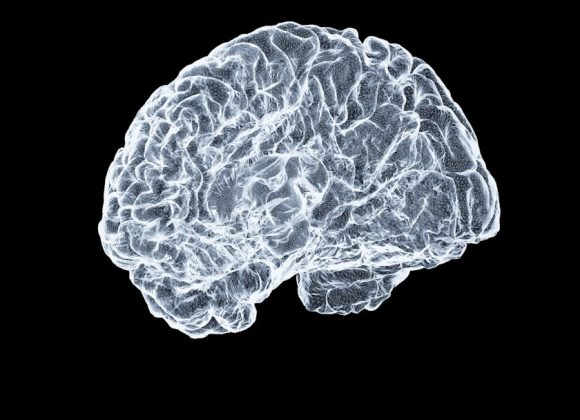
When a gambler hits a winning combination, their brain experiences a neurochemical surge remarkably similar to what occurs during cocaine use or alcohol consumption. This isn’t metaphorical—functional MRI studies reveal that gambling activates the same dopamine-driven reward circuitry that responds to addictive substances. The ventral striatum, a brain region central to processing rewards, lights up during wins, while the prefrontal cortex—responsible for decision-making and impulse control—simultaneously engages to evaluate the outcome’s significance.
How Wins Light Up the Brain
The brain’s dopamine system evolved to reinforce behaviors essential for survival, like eating or reproduction. Gambling hijacks this ancient mechanism. When a slot machine pays out or a sports bet succeeds, dopamine neurons fire rapidly, creating feelings of euphoria and satisfaction. This neurochemical reward doesn’t just celebrate the win—it encodes the entire sequence of events leading to it, strengthening neural pathways that make repeating the behavior more compelling.
Research shows the ventral striatum doesn’t simply respond to monetary gain. It reacts to the anticipation and uncertainty inherent in gambling. The unpredictability itself becomes rewarding, which explains why gamblers often report feeling most excited during the moments before results are revealed, not after.
The Near-Miss Effect: When Losing Feels Like Winning
Perhaps the most insidious aspect of gambling neuroscience involves near-misses—outcomes that almost result in a win. Studies using brain imaging demonstrate that nearly winning activates reward circuitry similar to actual victories, despite the gambler losing money. Two cherries appearing on a slot machine (one short of a jackpot) trigger dopamine release comparable to hitting three cherries, even though the financial outcome is identical to any other loss.
This neural quirk keeps players engaged despite mounting losses. Their brains interpret near-misses as evidence they’re “getting close,” encouraging continued play. Pathological gamblers show particularly strong neural responses to near-misses, coupled with reduced activation in the ventromedial prefrontal cortex—a region critical for evaluating consequences and controlling impulses. This diminished prefrontal activity impairs their ability to recognize mounting losses and make rational decisions about stopping, creating a neurological vulnerability that transforms recreational gambling into compulsive behavior.
Behavioral Psychology: Why Gambling Is So Hard to Resist
When B.F. Skinner placed pigeons in boxes during the 1950s and rewarded them with food pellets on unpredictable schedules, he unknowingly mapped the psychological architecture of modern gambling addiction. His operant conditioning experiments revealed a fundamental truth: behaviors rewarded randomly persist far longer than those rewarded consistently.
Skinner identified four reinforcement schedules, but one proved exceptionally powerful—the variable ratio schedule. Under this pattern, rewards arrive after an unpredictable number of responses. A pigeon might receive food after three pecks, then fifteen, then seven. This irregularity created behaviors remarkably resistant to extinction. Even when rewards stopped entirely, subjects continued responding far longer than those trained on predictable schedules.
Gambling operates on this exact principle. A slot machine doesn’t pay out every tenth pull or after a set time interval. Wins arrive randomly, creating the same psychological grip Skinner observed in his laboratory animals. The uncertainty itself becomes powerfully motivating. Players cannot predict when the next reward will arrive, so they continue playing to avoid missing it. This explains why someone can lose repeatedly yet remain convinced the next spin will be different.
The contrast with predictable rewards is striking. When outcomes follow a fixed pattern—a paycheck every two weeks, a vending machine that reliably dispenses snacks—people quickly notice when the pattern breaks and adjust their behavior accordingly. Variable reinforcement eliminates this predictability. Each gambling session feels like it could be the breakthrough moment, making disengagement psychologically difficult.
This mechanism affects the brain’s dopamine system, which responds not just to wins but to the anticipation of potential wins. The unpredictability amplifies dopamine release, creating a neurochemical environment that mirrors substance addiction. Skinner’s pigeons couldn’t reason their way out of conditioned behavior, and human gamblers face similar challenges overriding deeply ingrained psychological responses.
Cognitive Biases That Keep People Gambling
Human decision-making under uncertainty operates through predictable mental shortcuts that, while useful in everyday life, become exploited vulnerabilities in gambling environments. These cognitive distortions create systematic errors in judgment that keep individuals engaged in gambling behavior despite mounting losses.
The Gambler’s Fallacy
The gambler’s fallacy represents one of the most pervasive errors in probabilistic reasoning. This cognitive distortion involves the mistaken belief that past random events influence the probability of independent future outcomes. A person who witnesses a roulette wheel land on black five consecutive times begins to believe that red is “due” to appear, despite each spin maintaining identical 47.4% odds on a standard American wheel.
First formally documented in 18th-century studies of probability, this fallacy stems from our brain’s pattern-recognition systems incorrectly applying causality to random sequences. The phenomenon persists even among educated gamblers who intellectually understand statistical independence.
Illusion of Control
Gamblers frequently develop the conviction that their actions, rituals, or skills can influence purely chance-based outcomes. This illusion manifests in behaviors such as:
- Throwing dice harder to achieve higher numbers
- Developing “lucky” routines before placing bets
- Believing practice improves performance on slot machines
- Attributing wins to personal strategy rather than probability
Research demonstrates that this bias intensifies when individuals can physically interact with gambling mechanisms, such as pulling slot machine levers or throwing dice themselves, compared to observing automated processes.
Loss Aversion and Chasing Losses
Daniel Kahneman and Amos Tversky’s groundbreaking work on prospect theory revealed that humans experience losses approximately twice as intensely as equivalent gains. In gambling contexts, this asymmetry creates a powerful psychological trap: losing $100 generates significantly more emotional distress than winning $100 produces pleasure.
This disproportionate pain drives loss-chasing behavior, where gamblers increase bet sizes or frequency attempting to recover losses. The phenomenon creates an escalating cycle where mounting losses intensify the desperate need to continue gambling, transforming what began as entertainment into compulsive behavior driven by the overwhelming need to return to breakeven.
The Scale of Problem Gambling Today
Gambling disorder affects between 0.5% and 5% of adults worldwide, representing millions of individuals experiencing clinically significant impairment. In the United States alone, approximately 2.6% of adults meet diagnostic criteria for gambling disorder annually—a figure that translates to roughly 6.8 million people struggling with this behavioral addiction. These numbers reflect only those meeting full diagnostic thresholds; many more experience subclinical problems that still cause financial, relational, and psychological harm.
The statistics among young people reveal an alarming pattern. Research indicates that 60-80% of adolescents report having gambled for money within the past year, despite legal prohibitions. More concerning, 4-8% of this demographic experiences serious gambling-related problems, a rate substantially higher than the adult population. This early exposure creates neurological vulnerabilities during critical developmental periods when impulse control and risk assessment capabilities are still maturing.
The consequences extend beyond financial losses. Among problem gamblers, suicide attempt rates reach approximately 17%—more than five times the 3.3% rate observed in the general population. This stark disparity underscores gambling disorder as a serious public health crisis requiring intervention strategies comparable to those deployed for substance use disorders.
The COVID-19 pandemic accelerated troubling trends already in motion. Online gambling participation increased by 30-40% during lockdown periods, as isolated individuals sought entertainment and, for some, escape through digital platforms. This shift toward online formats presents unique challenges:
- 24/7 accessibility removes natural breaks that physical venues provide
- Anonymity reduces social accountability and oversight
- Speed of play allows for rapid financial losses within minutes
- Integration with mobile devices embeds gambling within everyday digital environments
- Targeted marketing uses sophisticated algorithms to identify and engage vulnerable users
These converging factors suggest that problem gambling prevalence may continue rising without coordinated public health responses addressing both prevention and treatment accessibility.
Practical Takeaways: Understanding Risk and Making Informed Decisions
Every commercial gambling activity is mathematically designed to extract money from participants over time. The house edge ensures that for every dollar wagered across millions of transactions, the operator retains a predictable percentage. This isn’t opinion—it’s probability theory in action. Understanding this mathematical reality forms the foundation for evidence-based decision-making around gambling.
Recognizing Cognitive Traps
Your brain actively works against rational risk assessment when gambling. Several well-documented cognitive biases distort perception and fuel continued play:
- The Gambler’s Fallacy: Believing that past outcomes influence independent future events (thinking a slot machine is “due” for a win after multiple losses)
- Near-Miss Effect: Experiencing losses that almost won as partial victories, which activates the same reward circuitry as actual wins
- Illusion of Control: Overestimating your ability to influence random outcomes through rituals, strategies, or “systems”
- Loss Chasing: Increasing bet sizes or frequency to recover previous losses, which accelerates financial harm
- Availability Bias: Remembering wins more vividly than losses, creating a distorted mental ledger of actual outcomes
When to Seek Help
Problem gambling develops along a spectrum. Early intervention significantly improves outcomes. Consider these warning signs:
- Gambling with money intended for essential expenses
- Lying to family members about gambling activities or losses
- Feeling restless or irritable when attempting to reduce gambling
- Using gambling as an escape from stress, depression, or anxiety
- Borrowing money or selling possessions to fund gambling
If you recognize these patterns, immediate resources include the National Council on Problem Gambling helpline (1-800-522-4700), which offers 24/7 confidential support. Self-exclusion programs allow you to voluntarily ban yourself from casinos and online platforms—a concrete barrier that removes opportunity during vulnerable moments. Treatment combining cognitive-behavioral therapy with financial counseling shows the strongest evidence for sustained recovery.
Understanding the Forces at Work
Gambling has persisted for five thousand years not because of moral weakness or lack of willpower, but because it exploits fundamental features of human brain architecture. From the dopamine-driven reward circuits that evolved to reinforce survival behaviors, to the variable ratio reinforcement schedules that create compulsive engagement, to the cognitive biases that distort our perception of probability—these mechanisms operate below conscious awareness, affecting everyone regardless of intelligence or education.
The archaeological evidence from Mesopotamian temples to Chinese gaming halls demonstrates that this vulnerability is universal and ancient. Pascal and Fermat’s probability theory gave us the mathematical tools to understand the odds, yet our brains remain stubbornly resistant to internalizing these truths. Modern neuroscience reveals why: gambling doesn’t just offer the possibility of winning money—it provides neurochemical rewards that feel indistinguishable from essential pleasures.
Understanding these mechanisms isn’t about judgment. It’s about informed awareness. If you choose to gamble, do so with full knowledge of the psychological and neurological forces at work. Recognize the warning signs in yourself and others: chasing losses, gambling with essential funds, using gambling as emotional escape, or lying about the extent of involvement. These patterns signal that entertainment has shifted into territory requiring professional intervention. The same scientific understanding that reveals why gambling is so compelling also points toward effective treatments—cognitive-behavioral therapy, self-exclusion programs, and peer support networks. Knowledge is the first line of defense against exploitation of our neural architecture.