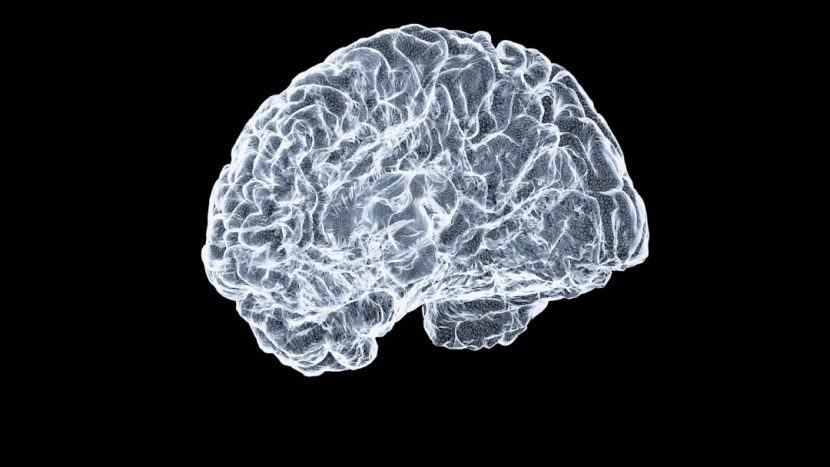
A poker player, already down $400, reaches for their wallet one more time. “Just enough to win it back,” they tell themselves. Across town, someone doubles their bet after a losing streak, convinced their luck must turn. These aren’t isolated lapses in judgment—they’re predictable patterns rooted in how human brains process loss, risk, and reward. This phenomenon, known as loss chasing, affects people across intelligence levels and backgrounds, driven not by character weakness but by measurable neurological and psychological mechanisms. Understanding why intelligent people make increasingly irrational decisions when losing requires examining the sunk cost fallacy, dopamine-driven reward systems, and cognitive biases that systematically override logical thinking. This article explores the science behind loss chasing and provides evidence-based tools for recognizing and interrupting these patterns before they cause serious harm.
The Sunk Cost Trap: Why Past Losses Drive Future Decisions
A gambler down $500 at a casino faces a straightforward choice: accept the loss and leave, or continue playing to recover the money. Logic suggests cutting losses, yet most people in this position continue betting. This response stems from the sunk cost fallacy—a cognitive bias where previously invested resources (money, time, effort) influence current decisions, even when those resources cannot be recovered and continuing offers no rational advantage.
The sunk cost fallacy operates on a fundamental misunderstanding of how value should guide decisions. Rational decision-making evaluates only future costs and benefits, treating past investments as irrelevant to current choices. However, human psychology struggles to write off what’s already been spent. When someone has lost money gambling, that loss creates psychological pressure to “justify” the expenditure by eventually winning it back. The brain treats walking away as confirming failure, while continuing offers the illusion of potential redemption.
This trap connects closely to the endowment effect, where people overvalue what they’ve already invested in compared to equivalent alternatives. A person who has spent $300 on lottery tickets may perceive that money as an “investment” requiring protection rather than a sunk cost demanding no further commitment. Research indicates that losses feel approximately 2.25 times more intense than equivalent gains, amplifying the psychological pain of admitting defeat and walking away empty-handed.
How Sunk Costs Create Commitment Escalation
The more someone invests in a losing proposition, the harder it becomes to stop. Each additional loss paradoxically increases commitment rather than triggering withdrawal. This escalation follows a predictable pattern: initial small losses feel manageable and recoverable, encouraging continued play. As losses mount, the psychological investment grows proportionally. The gambler begins thinking “I’ve already lost $500—I can’t stop now without getting something back.” This reasoning inverts rational analysis, using the magnitude of losses as justification for continued risk rather than as a warning signal.
The Psychological Difficulty of Walking Away
Accepting a loss requires confronting what behavioral economists call “realized loss aversion.” While money is already gone, leaving the gambling environment transforms a theoretical loss into a permanent one. The act of walking away forces explicit acknowledgment of failure, triggering shame, regret, and self-criticism. Continuing to play, even with diminishing odds, preserves hope and delays this painful reckoning. The brain’s ventromedial prefrontal cortex, which processes decision-making under uncertainty, becomes hyperactive during loss-chasing episodes, effectively overriding the logical assessment that further play only deepens the financial damage.
Brain Chemistry: The Dopamine Paradox of Near-Misses
When a slot machine displays two matching symbols with the third stopping just one position away, something unexpected happens in the brain: it responds almost identically to an actual win. Research published in Nature Neuroscience reveals that near-misses trigger dopamine release in the same neural pathways activated by genuine victories, creating a neurological illusion that propels continued risk-taking despite mounting losses.
Why Near-Misses Feel Like Progress
The brain’s reward system operates on prediction and anticipation rather than pure outcomes. Near-misses create a sensation of “almost winning” that the dopaminergic system interprets as meaningful progress. This neurological quirk explains why someone who loses $500 but experiences multiple near-wins feels compelled to continue, believing success is imminent. The ventral striatum, a key component of the reward pathway, shows heightened activation during these near-miss events, generating the same anticipatory excitement that precedes actual rewards.
This dopamine surge serves an evolutionary purpose in learning environments where persistence leads to skill improvement. However, in purely chance-based scenarios, this mechanism becomes maladaptive. The brain cannot distinguish between a near-miss in a game of skill and one in a random event, treating both as signals to persist.
The Prefrontal Cortex Under Siege
The ventromedial prefrontal cortex (vmPFC), typically responsible for evaluating outcomes and inhibiting impulsive behavior, becomes hyperactive during loss-chasing episodes. Rather than applying brakes to irrational decisions, this region paradoxically reinforces the urge to continue. Studies using functional MRI imaging show that during active loss-chasing, the vmPFC’s regulatory function diminishes while its emotional processing intensifies.
This neurological override creates a perfect storm: dopamine tells the brain that near-misses represent progress, while the compromised prefrontal cortex fails to counter this misinterpretation with rational analysis. Problem gamblers demonstrate even more pronounced patterns, with research indicating reduced baseline activity in prefrontal regions responsible for impulse control. The result is decision-making driven by neurochemical responses rather than probability assessment or financial reality.
Cognitive Distortions That Fuel Loss Chasing
When individuals chase losses, they’re not simply being irrational—they’re operating under a set of systematic thinking errors that make continued gambling feel like the logical choice. These cognitive distortions create a distorted mental framework where probability theory takes a backseat to flawed pattern recognition.
The gambler’s fallacy stands as perhaps the most pervasive distortion. After experiencing a string of losses, individuals become increasingly convinced that a win is “due” or overdue. This belief stems from a fundamental misunderstanding of probability: each independent event carries the same odds regardless of previous outcomes. A coin that has landed on heads five times in a row still has a 50% chance of landing on heads again. Yet the person chasing losses perceives their accumulated failures as building pressure toward an inevitable reversal.
The illusion of control manifests particularly strongly in scenarios requiring active participation. When people make choices—selecting numbers, pulling levers, or deciding when to bet—they overestimate their influence on random outcomes. Research indicates this distortion intensifies during loss-chasing episodes, as individuals convince themselves that refining their “strategy” or timing will alter fundamentally random results.
Selective memory and attribution bias create a feedback loop that reinforces continued gambling. Loss chasers disproportionately remember their wins while minimizing or rationalizing losses. When wins occur, they attribute success to skill or insight; losses get blamed on bad luck, near-misses, or external factors. This asymmetric processing prevents accurate assessment of actual performance over time.
The hot hand fallacy represents the inverse of the gambler’s fallacy. After experiencing a small win during a loss-chasing episode, individuals become convinced they’ve entered a “winning streak” and must continue to capitalize on their momentum. They perceive patterns in random sequences, interpreting statistical noise as meaningful trends. This false pattern recognition keeps them engaged long past the point where rational analysis would suggest stopping.
These distortions don’t operate in isolation—they compound and reinforce one another, creating a cognitive environment where chasing losses appears not just reasonable, but necessary.
Loss Aversion: Why Losing Hurts More Than Winning Feels Good
The sting of a $100 loss cuts deeper than the pleasure of a $100 win. This isn’t just a feeling—it’s a measurable psychological phenomenon. Research in prospect theory demonstrates that losses are felt approximately 2.25 times more intensely than equivalent gains. When someone loses $50 at a card table, their brain registers pain equivalent to missing out on a $112 windfall. This asymmetry creates a powerful emotional imbalance that drives people to make increasingly desperate decisions to recover what they’ve lost.
The Asymmetry of Emotional Responses
The disproportionate pain of losing triggers what researchers call loss aversion—a fundamental bias in human decision-making first documented by Daniel Kahneman and Amos Tversky. When faced with mounting losses, the emotional system floods the brain with distress signals that overwhelm rational thought processes. A person down $200 doesn’t calmly calculate their odds of recovery; instead, they experience acute psychological discomfort that demands immediate relief. This emotional intensity explains why 70-80% of problem gamblers report chasing losses during their sessions, even when they intellectually understand the futility of the behavior.
How Stress Compounds Poor Decisions
The stress response activated by losses further degrades decision-making capacity. As cortisol levels rise, activity in the prefrontal cortex—the brain region responsible for impulse control and rational analysis—decreases significantly. Meanwhile, the ventromedial prefrontal cortex becomes hyperactive during loss-chasing episodes, creating an override mechanism that pushes individuals toward immediate action rather than thoughtful consideration. This neurological shift transforms a calculated risk-taker into someone governed by emotional urgency, where the singular goal becomes erasing the painful memory of loss rather than making statistically sound decisions.
The Neuroscience of Impaired Impulse Control
When researchers examine the brains of individuals with gambling problems, they consistently find measurable differences in the prefrontal cortex—the region responsible for impulse control, planning, and rational decision-making. This isn’t simply a matter of poor choices. Neuroimaging studies reveal that problem gamblers exhibit reduced activity in this critical brain area, particularly during decision-making tasks that involve risk and reward evaluation.
Why Unpredictable Rewards Are So Powerful
The unpredictability of gambling outcomes creates what behavioral scientists call variable ratio reinforcement, the most powerful form of behavioral conditioning known to psychology. Unlike predictable rewards, which the brain learns to anticipate and eventually finds less exciting, random reinforcement keeps the dopamine system constantly engaged. The brain releases dopamine not only when a win occurs, but also during near-misses—those moments when symbols almost align or a bet nearly pays off. These near-misses activate the same neural pathways as actual wins, creating a neurological illusion that success is imminent. This hijacking of the brain’s learning system explains why people continue betting despite mounting losses: their neural reward circuitry interprets these near-misses as evidence they’re “getting closer” to winning.
The Erosion of Executive Function
Repeated exposure to this cycle creates a neurological feedback loop. The ventromedial prefrontal cortex, which normally helps weigh long-term consequences against short-term impulses, becomes hyperactive during loss-chasing episodes. This hyperactivity paradoxically impairs its regulatory function, allowing emotional urgency to override rational analysis. As this pattern repeats, the capacity for impulse control deteriorates further. The individual experiences increasingly diminished ability to stop, even when they consciously recognize the behavior as harmful. This neurological erosion transforms what might begin as recreational activity into compulsive behavior driven by altered brain function rather than deliberate choice.
Recognizing Loss Chasing Behavior: Warning Signs and Patterns
Loss chasing rarely announces itself. Instead, it emerges through subtle behavioral shifts that accelerate into destructive patterns. Recognizing these warning signs early—whether in yourself or someone else—can prevent minor setbacks from spiraling into significant financial and psychological harm.
Observable Behavioral Indicators
Loss chasing manifests through specific, identifiable actions:
- Increasing time and money investment after losses – Sessions that were planned to last one hour extend to three or four, with additional funds accessed through ATMs, credit cards, or digital payment methods
- Deviation from predetermined limits – Abandoning pre-set budgets or time boundaries, often justified as “just one more chance” to recover
- Accelerated decision-making – Betting or playing faster, skipping normal deliberation periods, and making impulsive choices without analysis
- Switching games or strategies mid-session – Moving from one activity to another in search of better odds, often selecting higher-risk options
- Secrecy and deception – Hiding the extent of losses from family members, lying about time spent gambling, or concealing financial transactions
Emotional State Indicators
The emotional landscape during loss chasing episodes follows a predictable trajectory. Initial losses trigger frustration and disappointment, which quickly transform into desperation and urgency. This emotional shift overrides the prefrontal cortex’s rational decision-making capacity, as the ventromedial prefrontal cortex becomes hyperactive during these episodes. Observable signs include visible agitation, physical tension, rapid speech patterns, and an inability to disengage from the activity despite obvious negative consequences.
Common Rationalization Patterns
People engaged in loss chasing employ predictable self-justification language:
- “I’m due for a win after so many losses” (gambler’s fallacy)
- “I’ve already invested too much to quit now” (sunk cost fallacy)
- “I almost won last time, so I’m getting close” (near-miss interpretation)
- “I just need to win back what I lost, then I’ll stop” (break-even fixation)
- “My luck has to turn around eventually” (misunderstanding of probability)
Escalation Patterns
Risk-taking behavior during loss chasing follows an escalating pattern. What begins as modest attempts to recover small losses evolves into increasingly desperate measures: borrowing money, accessing emergency funds, or taking larger risks on longer odds. Research indicates that 70-80% of problem gamblers report engaging in this behavior, with each escalation making rational disengagement progressively more difficult.
Breaking the Cycle: Evidence-Based Intervention Strategies
Interrupting loss chasing requires deploying specific tools before emotional arousal overwhelms rational judgment. Research on impulse control disorders demonstrates that interventions work best when implemented during calm states, not mid-crisis.
Pre-Commitment and Limit-Setting
The most effective strategy involves creating barriers before exposure to risk-taking situations. Pre-commitment devices work by restricting future choices when cognitive resources become depleted:
- Set non-negotiable monetary limits and deposit only that amount, leaving cards and additional cash at home
- Establish time limits using phone alarms or timers set at 30-minute intervals
- Use software blockers or self-exclusion programs that create mandatory cooling-off periods
- Share intentions with a trusted person who can provide accountability
Studies show that people who set concrete limits before engaging in risky activities are 60% less likely to exceed their boundaries compared to those who rely on willpower alone.
Reality-Testing Cognitive Distortions
Loss chasing thrives on faulty probability assessments. When you notice yourself thinking “I’m due for a win” or “I need to win back what I lost,” actively challenge these thoughts:
- Calculate actual probabilities rather than relying on feelings (a 1% chance remains 1% regardless of previous outcomes)
- Recognize that past losses have zero influence on independent future events
- Reframe sunk costs as already spent, not investments requiring recovery
Emotional Regulation Techniques
The ventromedial prefrontal cortex becomes hyperactive during loss-chasing episodes, hijacking rational decision-making. Physiological interventions can restore balance:
- Practice box breathing (4-count inhale, hold, exhale, hold) to activate the parasympathetic nervous system
- Take mandatory 10-minute breaks to allow cortisol levels to decrease
- Use the “STOP” technique: Stop, Take a breath, Observe your thoughts, Proceed mindfully
Seeking Professional Support
Professional intervention becomes necessary when self-regulation strategies consistently fail. Cognitive-behavioral therapy specifically addresses the thought patterns underlying loss chasing, while support groups like Gamblers Anonymous provide peer accountability. Contact the National Problem Gambling Helpline (1-800-522-4700) for immediate confidential support and treatment referrals.
Understanding the Path Forward
Loss chasing isn’t a moral failure or character defect—it’s a predictable outcome of how human brains process risk, reward, and loss. The sunk cost fallacy, dopamine-driven near-miss responses, cognitive distortions, and loss aversion work in concert to override rational decision-making. These mechanisms evolved for environments vastly different from modern gambling contexts, where variable ratio reinforcement and engineered near-misses exploit vulnerabilities in our neural architecture. Understanding these patterns represents the crucial first step toward self-awareness and behavioral change. Recognition allows you to identify warning signs before emotional arousal overwhelms executive function, creating opportunities to deploy pre-commitment strategies and reality-testing techniques. If you recognize these patterns in yourself or someone you care about, remember that effective professional help is available. Cognitive-behavioral therapy has demonstrated significant success in addressing the thought patterns that fuel loss chasing, while support networks provide accountability and shared experience. Breaking the cycle requires both knowledge and intentional action—but armed with understanding of these psychological mechanisms, you can make decisions aligned with your long-term wellbeing rather than temporary neurochemical impulses. The power to interrupt these patterns exists within informed, deliberate choice.